Vegetarian Bibimbap Bowl
A vegetarian take on the classic Korean rice bowl, assembled with a vibrant medley of mushrooms, greens and veggies. To finish, it is drizzled with a fiery-red Gochujang sauce which adds shades of heat and a potent depth of flavour.
Ingredients
- ½ cup rice (traditionally sticky short grain rice - kukohu or shirakiku rice - is used; however you can use regular white or even brown rice)
To make the bibimbap sauce
- 1.5-2 tbsp gochujang paste
- 1 tbsp sesame oil
- 2 tsp rice vinegar (can substitute with white wine vinegar)
- 1 tbsp water
- 1 tbsp + 1 tsp light soy sauce
- 2-3 tsp white sesame seeds, toasted
- 2-3 cloves of garlic, finely minced
- 1-2 tsp Sriracha (can substitute with chilli sauce of preference)
- 1 tsp brown sugar (increase if you would like the sauce less spicy)
Bibimbap bowl components
- 1 large carrot, spiralised / shredded/ sliced lengthwise
- 1 zucchini , sliced lengthwise/ spirallised
- 1 cucumber, spiralised or thinly-cut in rounds
- ½ bell pepper, sliced lengthwise
- 180 gm mixed mushrooms of choice (baby bella, white button, shiitake and/ or shimeji mushrooms work well)
- 2 large bunches of spinach
- 1 packet of silken firm tofu, drained
- egg (optional)
- sesame oil/ cooking oil of choice (as required)
- 2-3 cloves garlic, finely minced
- sesame seeds
- sea salt
- cornflour (for coating the tofu)
Instructions
- Start by cooking the rice according to the instructions on the packet.
Make the bibimbap sauce
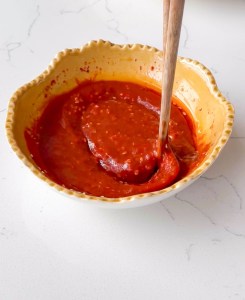
- Mix together ingredients for the sauce until evenly combined.
- Taste and adjust according to preference: for instance, adding more sugar to cut the heat; more vinegar for a punch; a splash more soy sauce for depth; more sesame oil for a nutty undertone etc.
Prepare tofu
- Drain the excess water out of the tofu by wrapping the block between paper towels and then gently pressing down to release the water using a steel plate or even a wooden chopping board.
- Let the tofu sit for at least half an hour (ideally an hour) until it is fully drained and firm enough,Then, cut it into cubes or long rectangular strips and coat it with cornflour.
- Head a tbsp of toasted sesame oil in a skillet and pan-fry the tofu for 7 – 10 minutes , flipping the pieces over until they’re golden brown and crisp on both sides. Remove from heat and set aside.
Prepare the individual components
- Mix the cucumbers with toasted sesame oil, garlic and salt (as per taste).
- Heat 1 tsp sesame oil in a pan and add approx 1 tsp garlic. Sautée spinach, tossing constantly until just wilted. Remove from heat and gently squeeze out any excess water from the spinach before setting aside.
- Heat another splash of sesame oil in the same skillet. Add the mushrooms to the hot pan and cook until golden-browned, tender and fragrant. Set aside.
- Heating oil as required, cook all the other ingredients (bell peppers/ carrots/ zucchini etc) until lightly sautéed but retaining their crunch.
- If adding an egg, fry it in the same skillet at the end to a runny consistency.
Assemble the bibimbap
- Start with a layer of rice and then top with the marinated cucumber, veggies, wilted spinach and mushrooms. Place your choice of protein (fried egg or tofu) in the centre. Garnish with toasted sesame seeds.
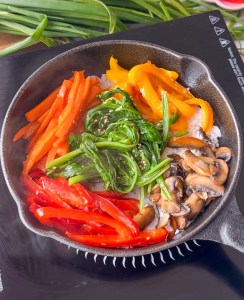
- Liberally drizzle with Gochujang sauce and serve hot, with more Gochujang sauce on the side.
- To eat, mix the sauce (and egg yolk if preparing with eggs) into the bowl until the rice, veggies and greens are thickly and evenly coated with the sauce.